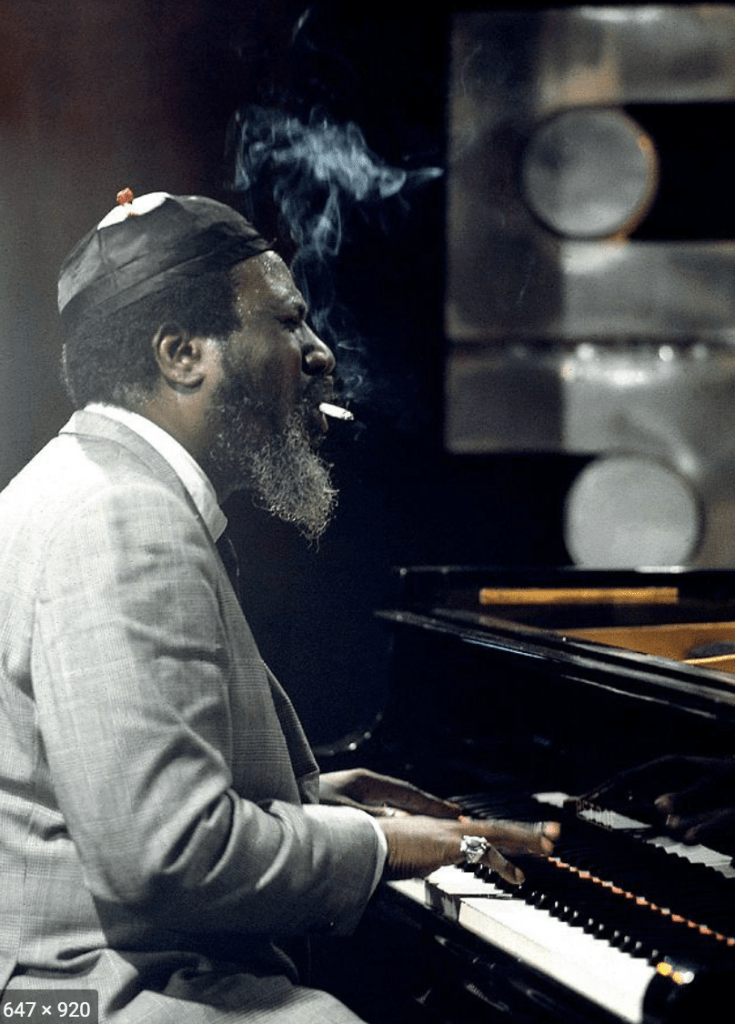
Curious. Eclectic yet grounded. Always slightly off beat. Thelonious Monk is arguably one of the greatest jazz musicians who ever graced the piano. His penchant for dancing around the stage in the throes of the music enchanted audiences. His effortless style, both musical and aesthetic, influenced the direction of the genre. Monk is the embodiment of the attributes I seek when looking for new educators to join our team. Much mythology surrounds Monk, lingering over his legacy like clouds of smoke in a jazz club, casting shadows of naivety and madness.
“Thelonious Monk possessed an impressive knowledge of, and appreciation for, Western classical music, not to mention an encyclopedic knowledge of hymns and gospel music, American popular songs, and a variety of obscure art songs that defy categorization”, writes Robin D.G. Kelley, author of Thelonious Monk: The Life and Times of An American Original. Kelley takes jazz enthusiasts well beyond the liner notes into the meandering life of an aptly termed “American original”. In doing so, he reminds me of the challenge principals and leadership teams face each year as they work to staff their schools with the right mix of talents and temperaments. Public education in America is in dire need of more ‘originals’. We need a teaching force with the ability to improvise like jazz musicians and sway with changes in the composition while onstage. They need to be ready to use their art and chosen profession to shape society for the better.

I was recently asked, “What are the factors you consider when undertaking school staffing?” My approach to staffing has changed over time from small, intimate interviews to a more open process which includes a broader sampling from my staff to assist in selecting candidates. Personally, I look for five attributes in candidates:
- The ability to improvise
- Broad exposure
- Reflectiveness
- Social justice leanings
- Readiness to adapt
Improvise, but keep the rhythm
The term ‘jazz improvisation’ can be applied to the art of teaching in the sense that it requires adjustments and a level of skill that is acquired over time. Jazz improvisation does not mean musicians are simply making it up as they go along. They all know the tune and the role of their instrument, but they fully embrace the flexibility of the moment and play in that manner. In the same vein as jazz improvisation pulls on the creativity of the participants, the art of teaching is neither formulaic nor random. It compels us to channel our passions, merge them with the interests of our students and our content in a way that creates magic.
Pull from everywhere
What are you plugged into that influences your approach to instruction? What ignites you from within? The articles, books and videos that inform our practice help us to continue evolving as educators. Educators must make the time to continue reading broadly. While formal education is necessary for earning credentials and certification, I would suggest that self-education is the most important education we can receive. The best teachers have interests as broad as Monk’s musical influences. Reading broadly on a range of topics adds immensely to a tool kit that students will inevitably ask you to pull from with questions about global warming, politics, or the arts.
Be reflective
Watching videos of Monk in rehearsals making adjustments to the tempo of a piece, and occasionally arguing with bandmates reveal a level of dedication to the craft. The varying temperaments, egos and levels of expertise on a team can become a challenge when it’s time to collaborate. When we care about the finished product, we devote the time to practice, reflect, study and adjust. Tell me about a time a lesson didn’t go as planned and how you adjusted it or retaught the material? In co-planning, how do you work through conflict? What can you offer our team?
Fight for something
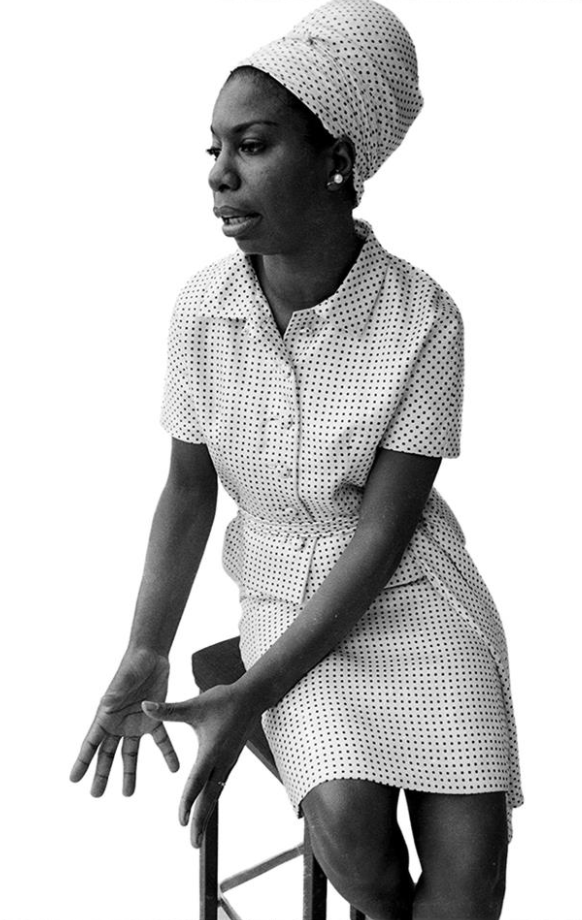
Teachers joining an instructional team, especially in urban settings, need to be willing to fight for something that matters. There are many wars to be won and education has become the front-line of sorts for the fight for human rights, civil rights and equity. Understanding this and being willing to confront and grapple with this on a daily basis is what it means to be the type of warrior teacher that changes student trajectories. Nina Simone was as much of an American original as Thelonious Monk. While other singers tried to mirror the sound of their contemporaries, her tone was unlike anyone else’s. In the case of Nina, the social climate of the 1960’s called for a level of artistic courage that Nina was built for since her early years in South Carolina. Nina fully embraced her culture and understood that her embrace of her culture had implications for people of color around the world. Her hairstyles, her jewelry, her attire and the content of her lyrics represented the full spectrum of her gospel, soul, and jazz roots in the American South. She realized the powerful role of the influence of artistic interpretations a society in flux. She recorded songs like “I Wish I Knew How It Would Feel to Be Free” and “Young Gifted and Black” that gained critical acclaim and provided a soundtrack to a social movement. In 1967, Nina Simone released the album “Nina Simone – High Priestess of Soul”. On the back of the album, the Del Shields describes Nina in this manner:
“Songwriters who write songs with a message, because they feel that survival is based on truth, seek her out. And she records their material. Many times she has suffered the banishment of her tunes by the archaic censors who fear to upset the establishment. On occasion she has become the center of controversy because she demands first-rate conditions in order to perform at her maximum degree of excellence for her audience. And this is Nina.”
Be Ye Ready
For two years I traveled to schools alongside a talented group of jazz musicians presenting a program called “Taking Notes: Jazz and the American Story”. The band consisted of Karen Gordon on piano, Joe Collier on trumpet, Dave Weston on bass, Not Gaddy on drums, and Jimmy Easton on saxophone. The program chronicled American history and how it was reflected in the evolution of Jazz music from the 1800’s through present times. My role was to provide a story telling component at intervals between the songs. When we faced time constraints or tech issues, we’d make slight changes in the set list and the audiences never knew we were improvising. The best musicians, like the best teachers, are always ready for a change in plans. Demonstrating flexibility in the face of change has meant much more in recent weeks with school closures and virtual learning taking center stage in public education.
When educators study the genre of jazz, we learn about its African roots, we learn about how musical styles develop over time, and we learn about freedom. Jazz teaches us that truth can’t be muted. It teaches us that even in the bluest moment, there is something to celebrate. It teaches us the value of being unscripted. Send me the American originals! I am seeking out American originals to join our school. I want to hear from someone who failed at delivering a lesson and revised it and came back stronger. I want to hear from someone who speaks truth and authenticity and doesn’t sprinkle their narrative with politically correct catch phrases like “life long learning”, “all students can learn”, “no child left behind” and “free and reduced”. Ours is a profession battling a psychometric obsession with sorting and organizing. Students and adults would do well to heed the advice of Thelonious Monk: “The genius is the one most like himself.”
Soundtrack to this blog: Don’t Let Me Be Misunderstood by Nina Simone
 DEF-ED!
Leave a comment