A Framework for Transforming Literacy Instruction Through Culture, Creativity, and Academic Rigor
A DEF-ED Professional Learning Experience
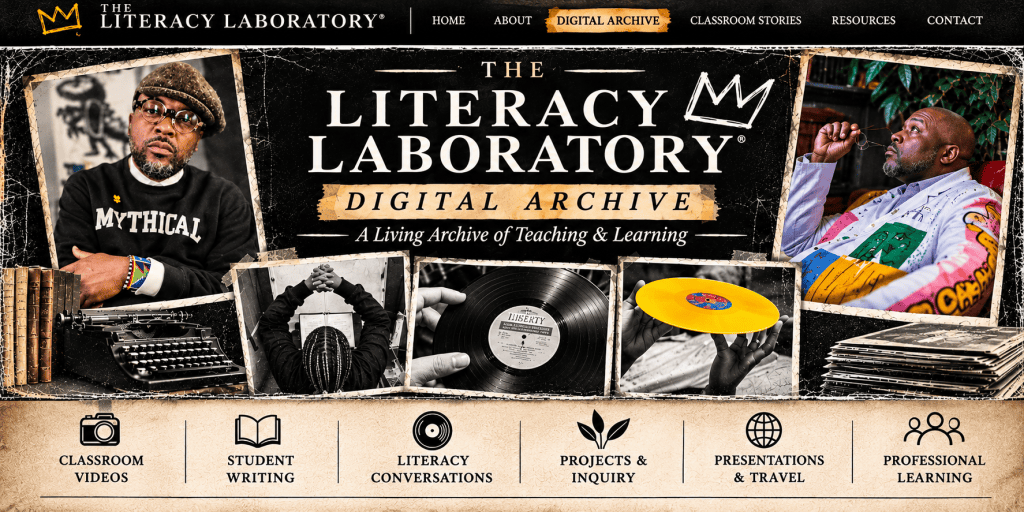
The Literacy Laboratory is an innovative, interdisciplinary instructional framework designed to transform how students experience reading, writing, language, and learning. Developed by Dr. Andre Benito Mountain, the framework challenges traditional approaches to literacy instruction by integrating research-based instructional practices with culturally sustaining pedagogy, the arts, history, music, and authentic learning experiences.
At its core, the Literacy Laboratory operates on a fundamental belief: Students achieve at higher levels when rigorous literacy instruction is connected to meaningful intellectual and cultural experiences.
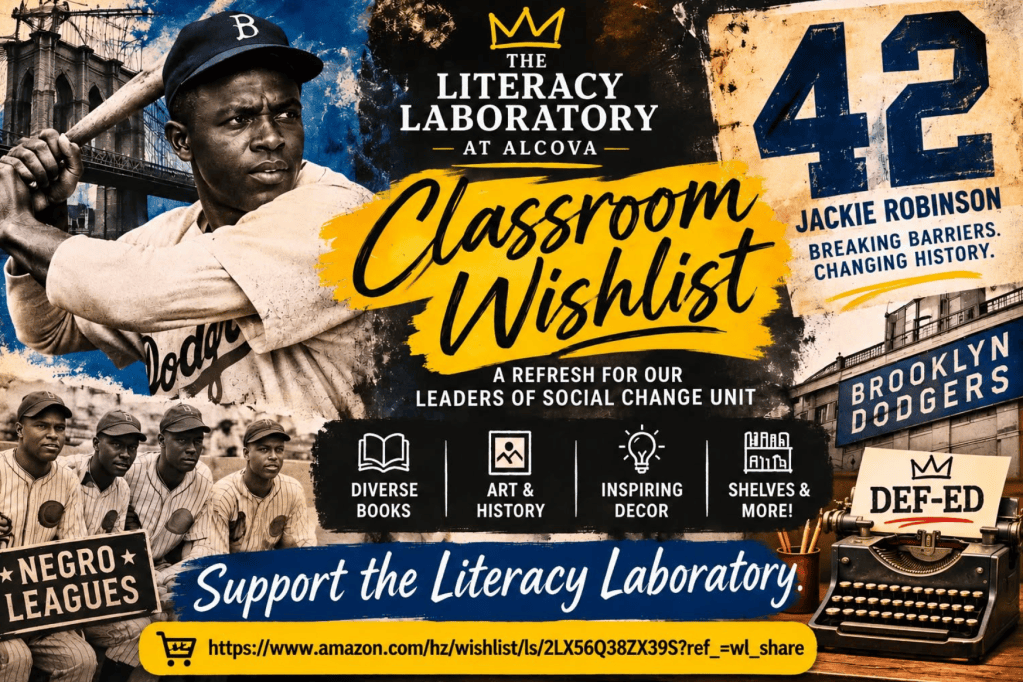
THE LITERACY LABORATORY: A NEW CHAPTER!
Over the past year, I’ve enjoyed sharing the innovative teaching approaches, creative experiences, and remarkable progress of our students in the Literacy Laboratory.
As we prepare for our upcoming Leaders of Social Change unit, beginning with Jackie Robinson’s historic journey to the Brooklyn Dodgers, we’re transforming our classroom into a Brooklyn-inspired Writer’s Loft celebrating literature, art, music, history, and culture.
 We’ve created an Amazon Classroom Wishlist to help bring this vision to life!
If you’ve enjoyed following our journey and believe in the work we’re doing, we’d appreciate your support or a share!
In the Literacy Laboratory, deep focus is essential to intellectual growth. Time on task, reading stamina, and academic rigor are cornerstones of our instructional approach. Students are challenged to sustain their attention, engage deeply with complex texts, think critically, and persevere through demanding academic tasks. We believe meaningful learning requires concentration, discipline, and sustained intellectual effort. In the Literacy Laboratory, we cultivate the habits of mind necessary for independent, confident, and accomplished readers and writers.
1. Instructional Strategy
Liner Note Literacy: Students analyzed jazz record liner notes to identify sensory details and concrete language in authentic writing.
2. Instructional Rationale
This strategy connects literacy instruction with music and cultural artifacts, allowing students to examine how professional writers use language to create meaning beyond traditional classroom texts.
3. Learning Target
I can identify sensory details and concrete language in a text and explain how these techniques strengthen descriptive writing.
Morphology in Motion: Greek and Latin Roots
This cooperative learning task was designed to reengage students in morphology through collaborative problem-solving. Students worked together to match Greek and Latin roots with their meanings, using digital devices to research, verify, and discuss their findings. Rather than emphasizing rote memorization, the Literacy Laboratory prioritizes research, critical thinking, collaboration, and the application of literacy skills. By investigating word origins and making connections between roots and meanings, students strengthened their vocabulary development, morphological awareness, and ability to independently determine the meanings of unfamiliar words.
Five Pillars of the Literacy Laboratory Framework
1. Culture as a Catalyst for Learning
Culturally sustaining instruction connects students’ identities, histories, languages, and lived experiences to academic content while introducing perspectives that challenge assumptions and expand understanding.
2. Arts Integration and Interdisciplinary Literacy
Music, visual art, literature, history, and cultural artifacts become authentic instructional resources for developing reading comprehension, vocabulary, analytical thinking, and written expression.
3. Academic Rigor and Deep Intellectual Engagement
Students develop reading stamina, sustained attention, close-reading strategies, morphological awareness, and the ability to engage independently with increasingly complex texts.
4. Student Voice, Collaboration, and Authentic Writing
Structured academic conversations, cooperative inquiry, debate, research, journaling, and iterative writing processes strengthen communication, reasoning, and student ownership of learning.
5. Data-Informed Instruction and Measurable Growth
Diagnostic assessments, formative evidence, targeted small-group instruction, differentiated enrichment, independent practice, and strategic family partnerships support individualized academic growth.
Culture has the power to disrupt conventional thinking, challenge assumptions, and create opportunities for growth. Meaningful learning often begins when we are unsettled, pushed beyond our comfort zones, and exposed to unfamiliar perspectives. In the Literacy Laboratory, we embrace cultural experiences that provoke curiosity, challenge established ways of thinking, and inspire deeper intellectual engagement. Growth does not always emerge from comfort; sometimes, it is disruption that makes transformation possible.
Jazz teaches us that joy and pain can coexist, that beauty and struggle are often born from the same experience. The same America that produced musical geniuses like Dizzy Gillespie and Cab Calloway also institutionalized Jim Crow segregation, denying Black Americans the very freedoms their artistry celebrated. This contradiction lies at the heart of the American story—a nation capable of extraordinary cultural brilliance while perpetuating profound injustice. In the Literacy Laboratory, we explore these tensions because understanding culture requires us to confront not only what a society creates, but also what it must overcome.

